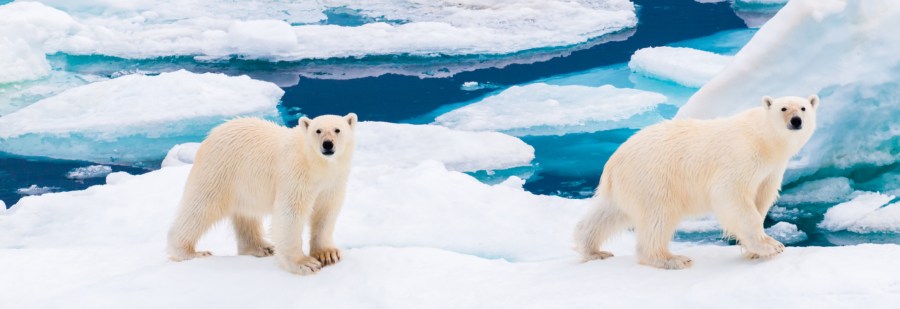
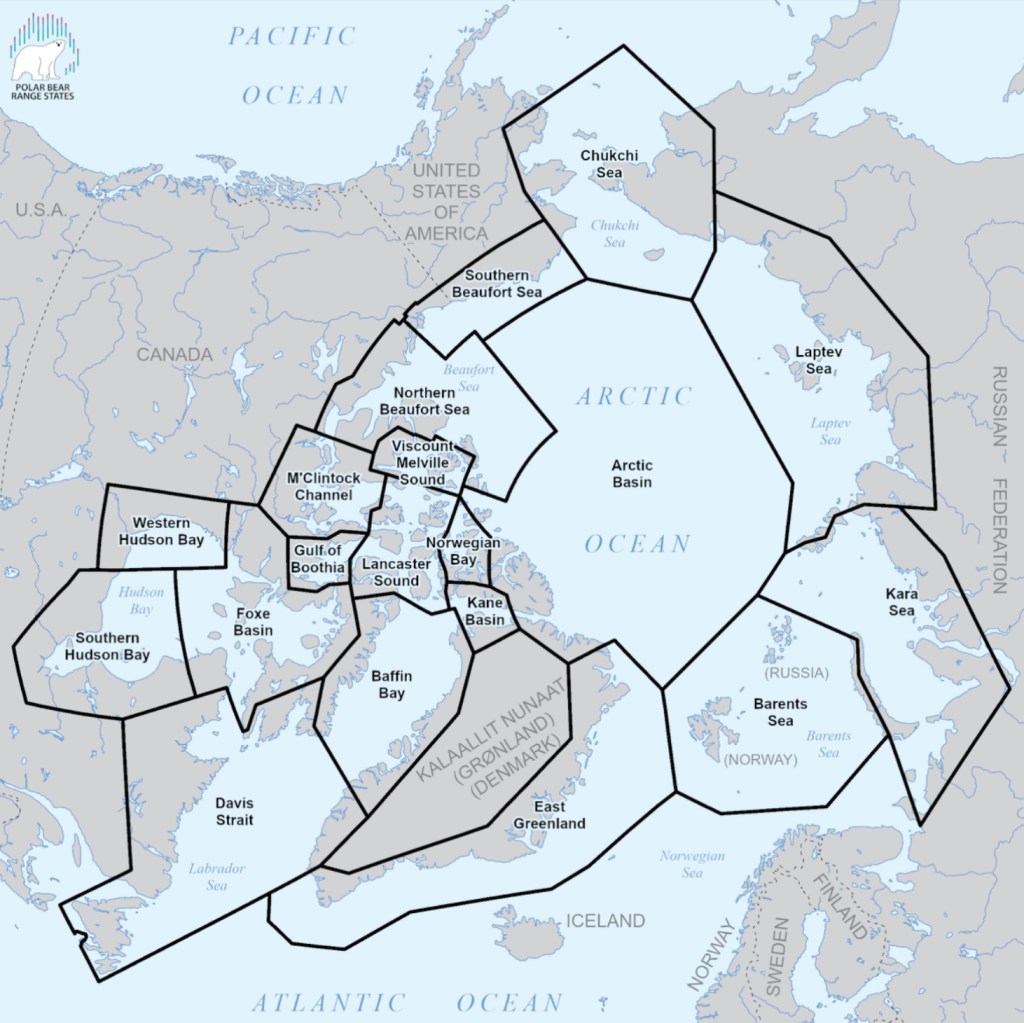
Welcome back to Bio On The Rocks. The 27th of February, International Polar Bear Day, provided the perfect occasion to dedicate a post to the “King of the Arctic”. In my first blog post about the safety course, I mentioned that many had “warned” me about the polar bears. I was often asked, half-jokingly, “Did you have to learn to shoot?” Let me make one thing clear: The danger of being attacked by a polar bear in Svalbard is extremely low. Contrary to the common belief that about 3,000 polar bears inhabit the island, the population across the entire archipelago and the adjacent pack ice amounts to only 2,650 animals. On Spitsbergen itself, there are only around 250 polar bears regularly (Norsk Polarinstitutt).
Although the likelihood of an encounter is extremely low, caution is advised. Outside Longyearbyen’s boundaries, carrying a flare gun is mandatory to potentially scare off a polar bear in an emergency. Carrying a rifle is also recommended. We learnt extensively how to use these devices during our safety week. However, this blog is not intended to delve into this topic further. Instead, my aim is to enlighten you about the fascinating biology of polar bears and the dangers they face.
The polar bear’s scientific name, Ursus maritimus, highlights its adaptation to life in and around the sea. Therefore, I’d like to briefly talk about some of the polar bear’s physical adaptations to the cold and unique conditions of the Arctic Ocean. One of the most striking adaptations is its thick layer of fat, which can reach up to 11 cm. It serves as a crucial insulator, minimising heat loss and enabling the polar bear to maintain its body heat even at extremely low temperatures. It also plays a vital role as an energy reserve, which the polar bear can draw upon when food is scarce.

The coat consists of dense, waterproof underfur and longer guard hairs that are hollow. These hollow hairs provide insulation by trapping air, helping the polar bear to retain its body heat. Additionally, the translucent fur reflects light, offering the bear excellent camouflage in its snow- and ice-covered environment. Beneath this specialised fur lies dark skin, which enables it to better absorb the sun’s rays and gain additional warmth.
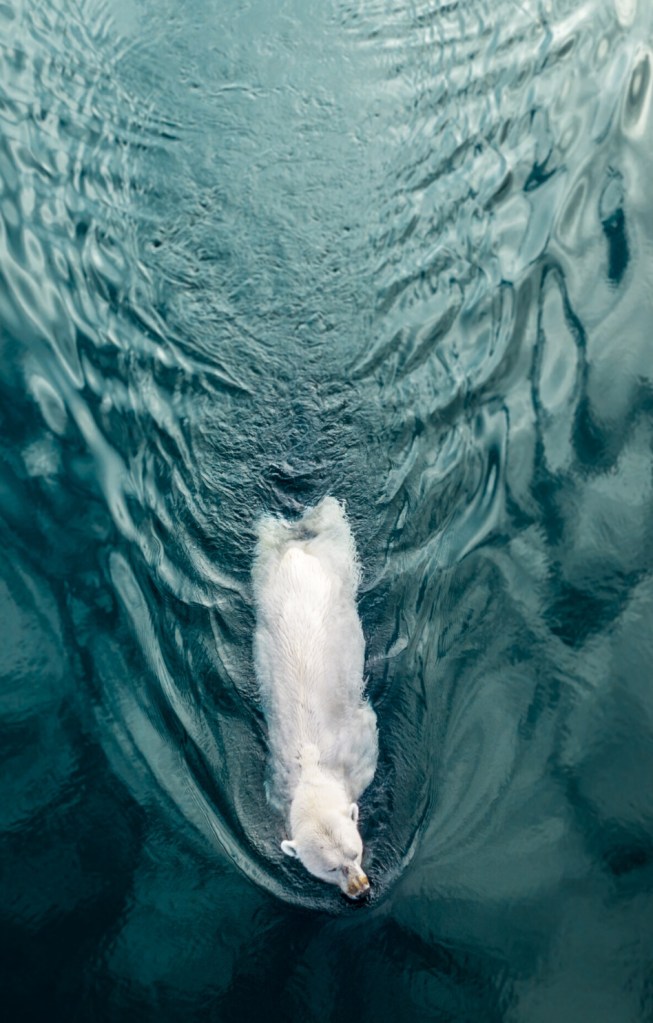
Polar bears are also excellent swimmers, a crucial skill in their habitat. Their large front paws serve as effective paddles, while their hind legs act as a rudder. These adaptations allow the bear to swim with remarkable endurance. Observations have been made of individuals swimming several hundred kilometres at a stretch.
They prefer the regions up to 100 nautical miles north of the ice edge, where the ice is thick enough to support them, and sufficient food is available. In spring, they feed on Ringed Seals and in summer on Bearded Seals, both of which are strictly dependent on sea ice. However, they also prefer to mate on the sea ice, typically in spring. At this time, tracks can be seen in the snow left by various polar bears at the same spot. Male polar bears fight for the favour of the females, resulting in them often bearing numerous scars as they age.
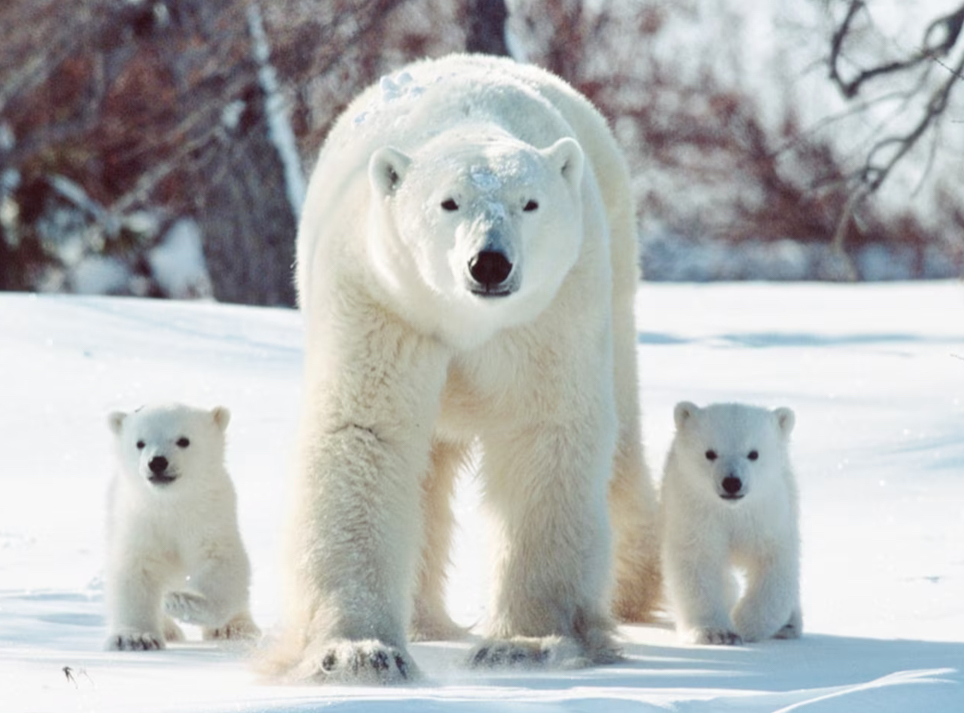
Towards the end of the year, pregnant females predominantly retreat to the southeast of the archipelago, where the snow allows them to build their dens. These pregnant females are the only polar bears to hibernate. After several weeks in the dens, they usually give birth to two cubs that are blind, naked, and very small – weighing less than one kilogram. In the protective environment of the den, they are raised on their mother’s particularly nutrient-rich milk for several months until they are strong enough in spring to explore the surroundings with her and start feeding on meat early on. However, the survival rate of polar bears in the first year of life is only 30%. Once they reach their fifth year, they typically survive the next ten years. After reaching the age of 15, their survival probability drops drastically, with starvation being the most common cause of death. They are then no longer able to cope with the sometimes extraordinarily long and arduous journeys and periods of hunger.
At the start of the last century, polar bears in Svalbard faced a significant threat from hunting, especially during the 1920s when the population experienced a drastic decline due to hunting. Fortunately, since 1973, polar bears have been afforded global protection under the Washington Convention on International Trade in Endangered Species. In Svalbard, hunting polar bears is strictly prohibited, and any infringement of the conservation regulations is rigorously penalised, allowing the population to recover.
However, the implementation and enforcement of the agreement rest with each member state. Consequently, hunting polar bears remains permissible in Canada, Greenland, Alaska, and Russia, albeit to a limited extent.
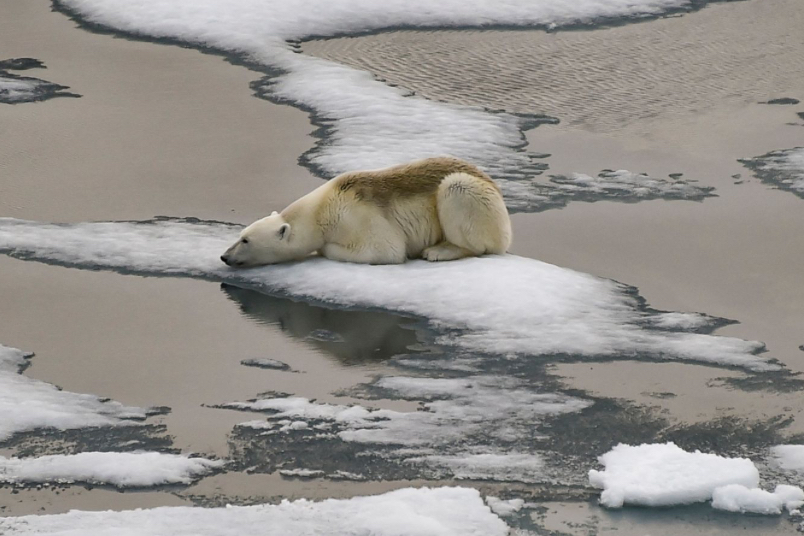
Biologists agree, however, that hunting is not the greatest threat to polar bears. The declining population numbers caused by hunting can be somewhat mitigated through strict regulations. Far more threatening to polar bears is climate change and the associated rapid warming of the Arctic. Climate change leads to decreasing sea ice, a process that occurs even more drastically in Svalbard. The loss of habitat, such as the sea ice, is irreversible.
This is why the so-called “carrying capacity” for polar bears in the Barents Sea is declining. The term “carrying capacity” from ecology describes how many living beings a specific habitat can maximally support. Applied to the Arctic, this means how many animals of a species, for example, polar bears, can live in this area without encountering problems such as food shortages. The carrying capacity is influenced by many factors, including the availability of food, living space (also space for building dens), and other essential resources. It is assumed that the polar bear population in Svalbard could decrease by 30% over the next three generations.
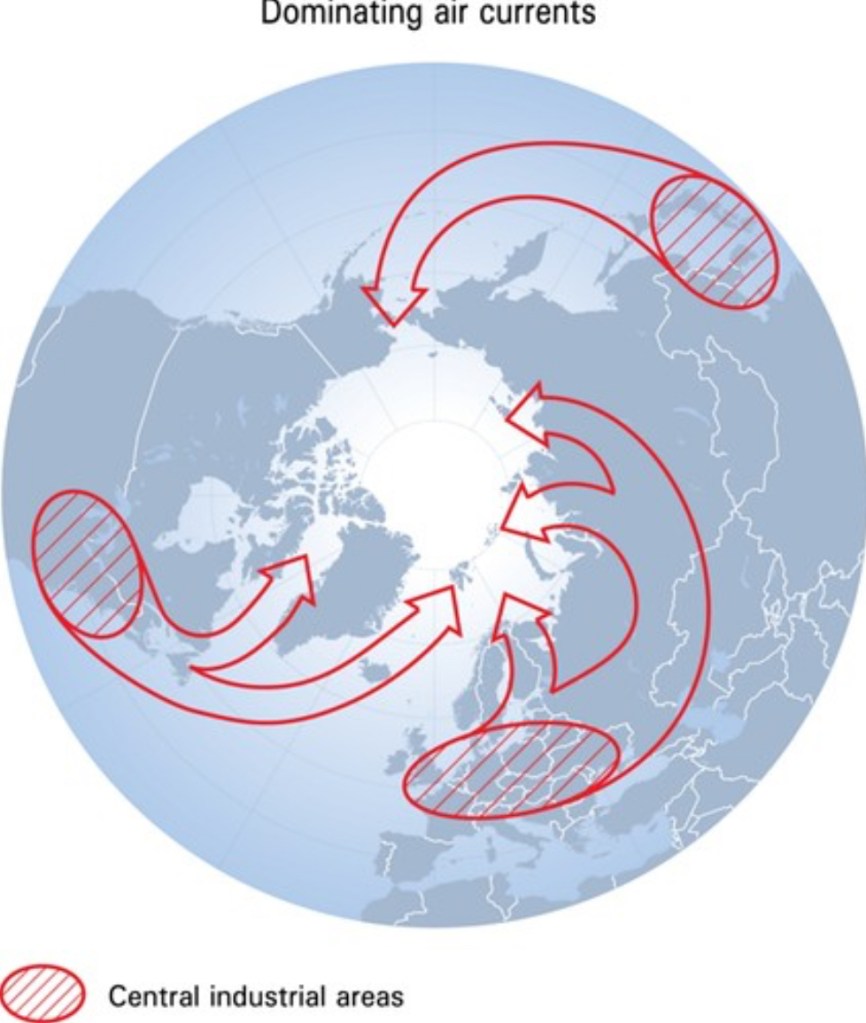
Another significant threat to polar bears must not be overlooked: pollutants! The Arctic contains numerous persistent organic pollutants (POPs) that do not originate locally but come from highly industrialised regions of the world and are transported by winds to the North, where they accumulate.
Polar bears, at the top of the Arctic food chain, mainly feed on seals, which in turn eat smaller fish and even smaller plankton. Many of these pollutants, especially POPs, are long-lasting and do not degrade in the environment. They are absorbed by the lower levels of the food chain and accumulate in the bodies of the animals, particularly in the fatty tissue. Therefore, if a seal consumes many fish contaminated with pollutants over its lifetime, these pollutants accumulate in its body. When a polar bear eats many such seals, the pollutants further accumulate in its body. This process of accumulation is known as bioaccumulation.
For polar bears, these pollutants can lead to serious health consequences, including hormonal imbalances, immune system problems, and reproductive issues. Due to their position at the top of the food chain, they are theoretically especially vulnerable to the high concentrations of these pollutants that accumulate in their bodies through bioaccumulation. However, there is also good news: polar bears appear to process these pollutants far better than expected, meaning they suffer less from the burden.
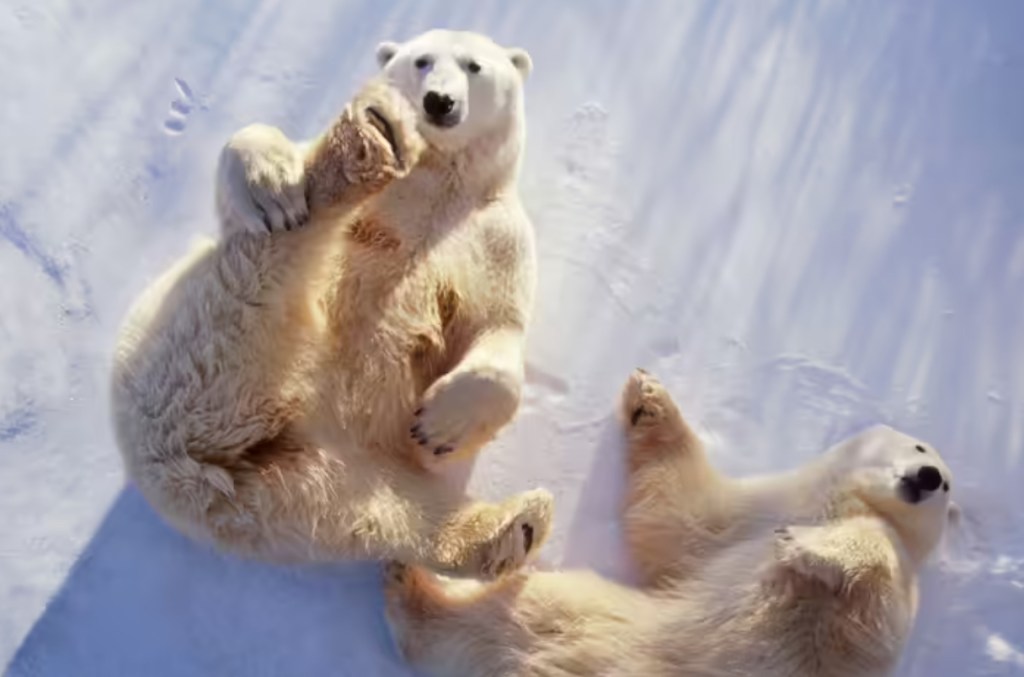
It is consistently remarkable how resilient and adaptable polar bears are, especially regarding their food sources. Polar bears feeding on washed-up whale carcasses have been long known. However, in recent years, there has been an increase in observations of them visiting bird colonies to feed on eggs. Likewise, instances of polar bears hunting the growing reindeer population in Svalbard are becoming more frequent. There are even reports of mothers teaching their cubs to hunt reindeer instead of seals. These behavioural changes are undoubtedly due to the harmful effects of climate change and, of course, have significant impacts on other organisms. Nevertheless, the polar bears seem to be fighting with all their might despite all odds.
Therefore, I appeal to all of us to be as brave and creative in dealing with global changes as the polar bears. And perhaps I’ll be lucky enough to encounter a polar bear in the coming months – from a safe distance, of course. In April, a five-day sampling excursion with a ship around the island is scheduled… that would be the perfect opportunity. I will report to you!
 Bio On The Rocks