Welcome back to Bio On The Rocks. Actually, the next post in the series would be about meiofauna, a topic we have now also covered at UNIS. After having reported on the smallest living organisms (plankton and ice algae), it would be time to discuss the next larger ones – and such an article will indeed follow. However, this week, I had the privilege of experiencing something extraordinary that means a lot to me personally and that I found so impressive that I must report on it immediately.
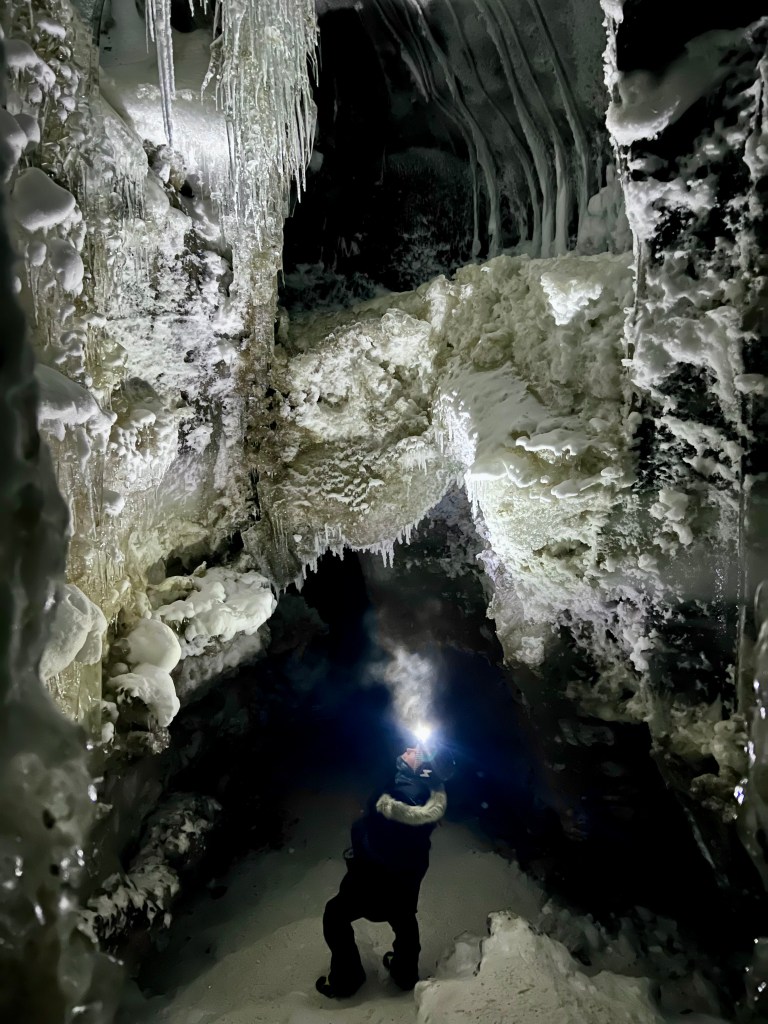
On Friday evening, I went on a hike with a small group to one of the ice caves here in Svalbard. These caves form inside and beneath the glaciers, where meltwater accumulates and flows away. Under certain circumstances, some of these meltwater channels are accessible. But before such a fascinating, accessible meltwater channel can form, a glacier must first form and reach a certain thickness.
Therefore, let’s start with an explanation of how glaciers form and what conditions are necessary for a glacier to develop. We begin with snow, as it is the raw material for glaciers. Snowfall and the formation of a snow cover are determined by two factors: the temperature and the actual amount of snow that has fallen. These, in turn, depend on the location’s climate and elevation.
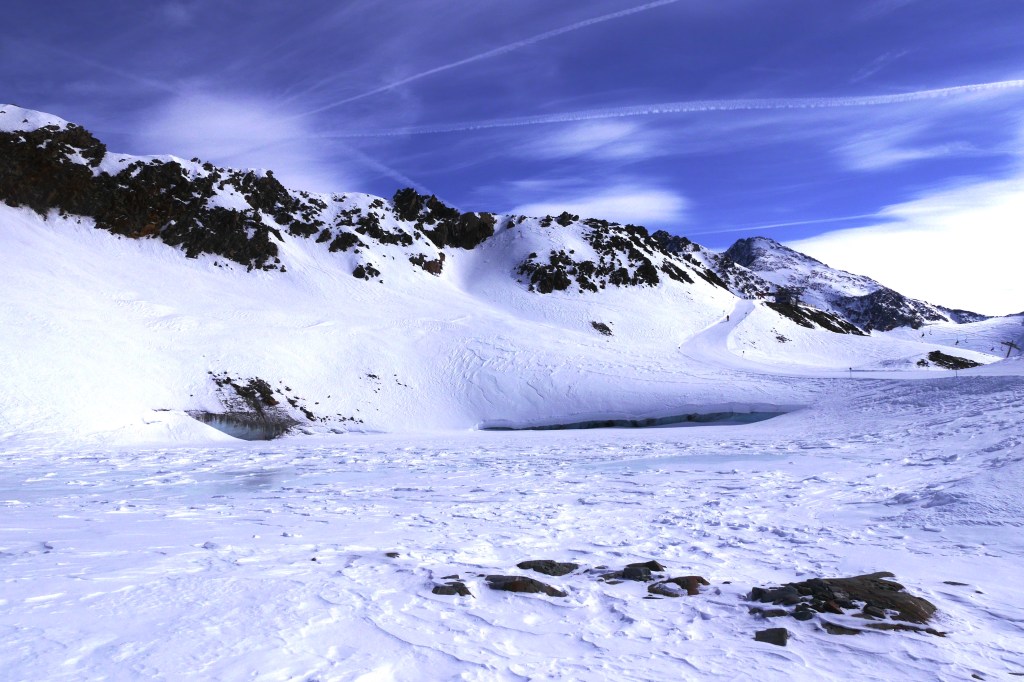
Glacier ice is thus formed from snow – that much is clear. However, the ratio of snow to ice is remarkable, about 80:1. This means that to form just one centimetre of glacier ice, 80 centimetres of snow must fall in advance. It becomes even more astonishing when we consider that the ice caps of Greenland can reach a thickness of up to 3,000 metres. To achieve such a thickness of ice, 240 kilometres of snow were required. Especially in the precipitation-poor polar regions, it can take a very long time for such amounts of snow to accumulate, making this process seem almost endless. Even in geological time frames, this is notable. The formation of the Greenland ice cap would take about 250,000 years.
The transformation process from freshly fallen snow, which can contain up to 90% air, to compact glacier ice predominantly occurs in the summer. At this time, the days are often sunny enough to melt the snow, while the nights remain cold enough for the water to refreeze. First, coarse-grained, old snow – also known as firn – which still contains 50% air, is formed. Through further melting and freezing cycles and the pressure of new snow masses from above, the air is further pressed out of the firn until, after several years, glacier ice is formed, which only has an air content of 2%.
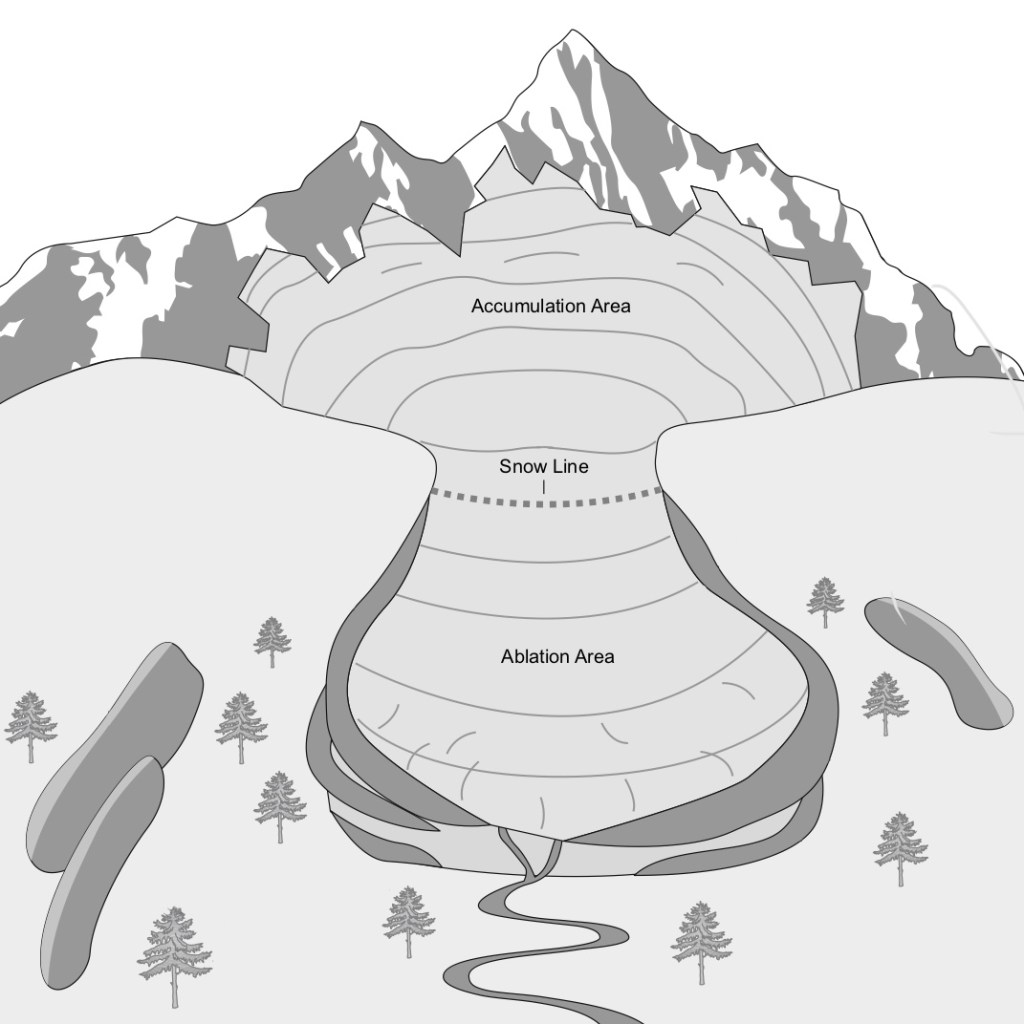
It might seem that a growing glacier would only grow in height. However, this is not the case, as glaciers flow following gravity and, therefore, primarily expand in length and width. A glacier can be divided into two primary areas: the accumulation area above and the ablation area below the snow line. In the upper area, more snow falls than can melt, while in the lower area, more ice melts than is replaced by precipitation.
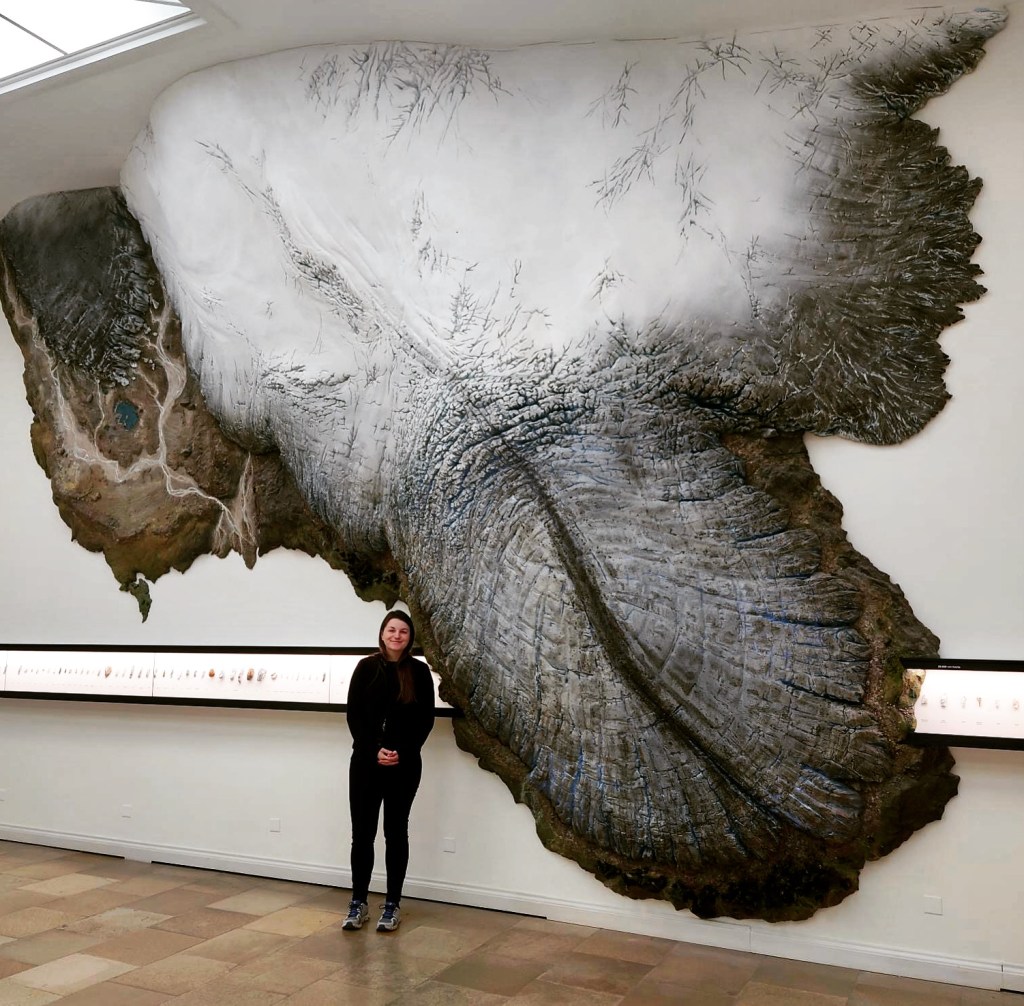
On a molecular level, ice crystals in the deeper layers begin to slide and reorient themselves under the influence of pressure and gravity. These internal movements allow the glacier ice to slowly deform and flow downhill. The speed of this flow is influenced by the slope of the ground, the thickness of the ice, and the prevailing temperature conditions.
Basal sliding is an additional mechanism that promotes the flow of glaciers. It occurs when meltwater at the glacier’s base acts as a lubricant, facilitating the ice’s glide over the underlying rock. This meltwater can be generated by increased pressure beneath the glacier, geothermal heat, or the infiltration of surface water through cracks in the ice.
However, glacier ice is not limited to downhill flow. In some cases, the thrust force of the ice, also known as firn field pressure, in the accumulation area of the glacier can be so strong that it is capable of pushing the ice in the ablation area uphill. A notable example of this is the Sognefjord on the west coast of Norway, which was formed through this process. There, the ice has carved out the mountains against the natural gradient, overcoming a height difference of 1,000 metres.
With the increase in outside temperatures during the summer on the glacier’s surface and due to friction at its base, meltwater is continuously released. This water, alongside the ice itself, is a crucial element that shapes the landscape. Due to its river-like character, it can erode material and deposit it elsewhere. Such processes are referred to as glaciofluvial and occur both within (intraglacial) and beneath (subglacial) the ice. Far from its origin, the meltwater from glaciers can also significantly influence the morphology of the landscape.
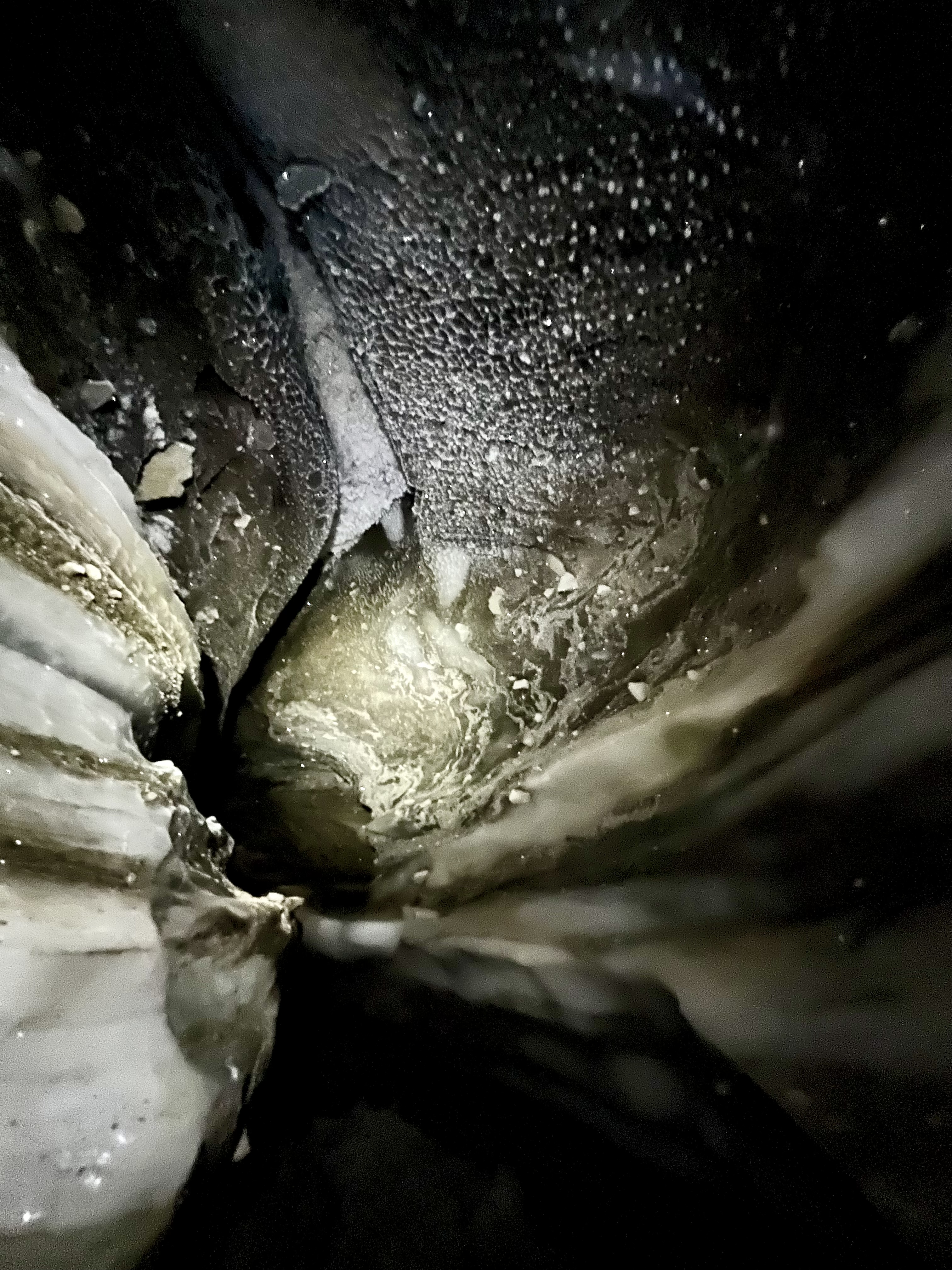
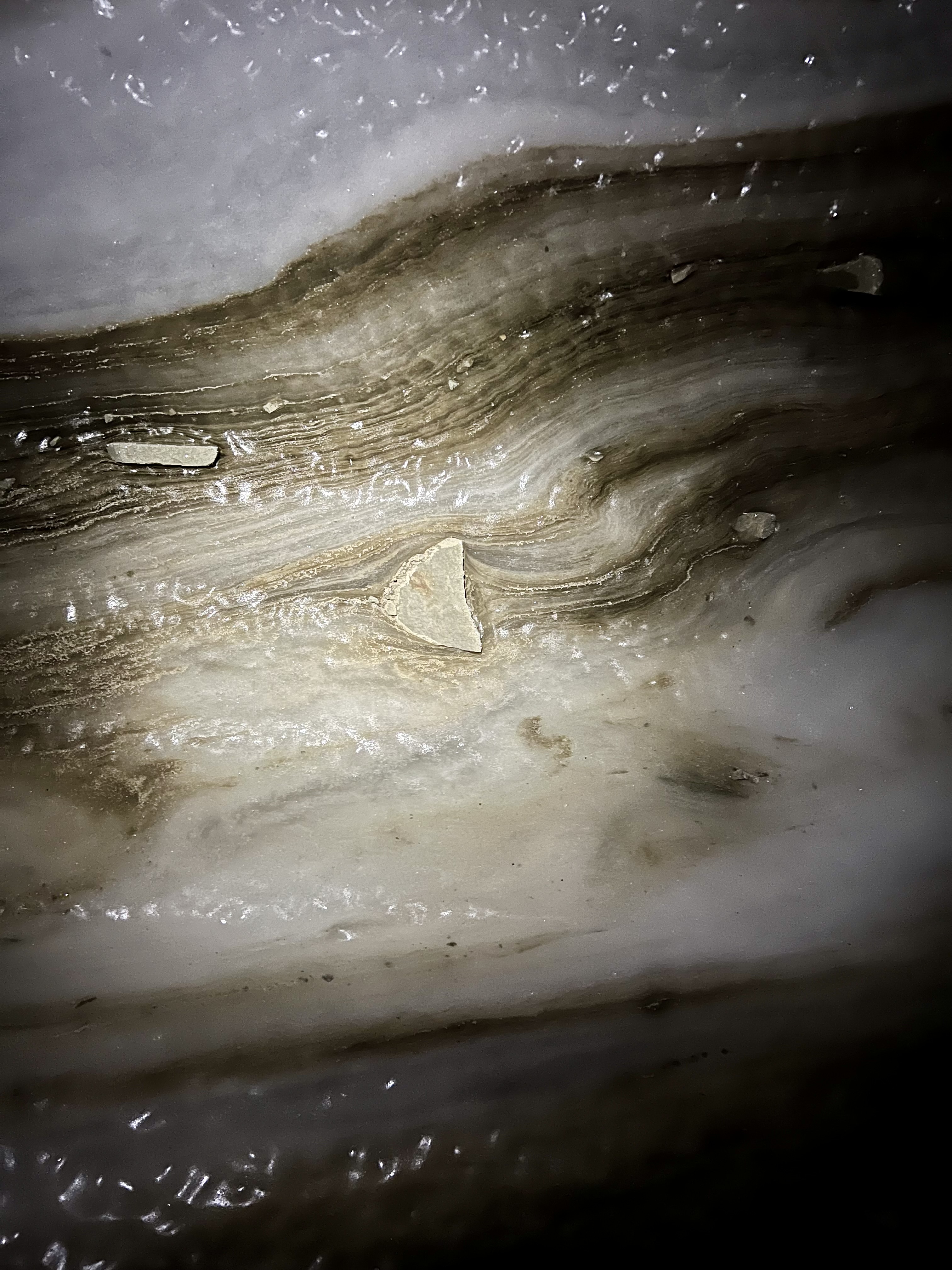
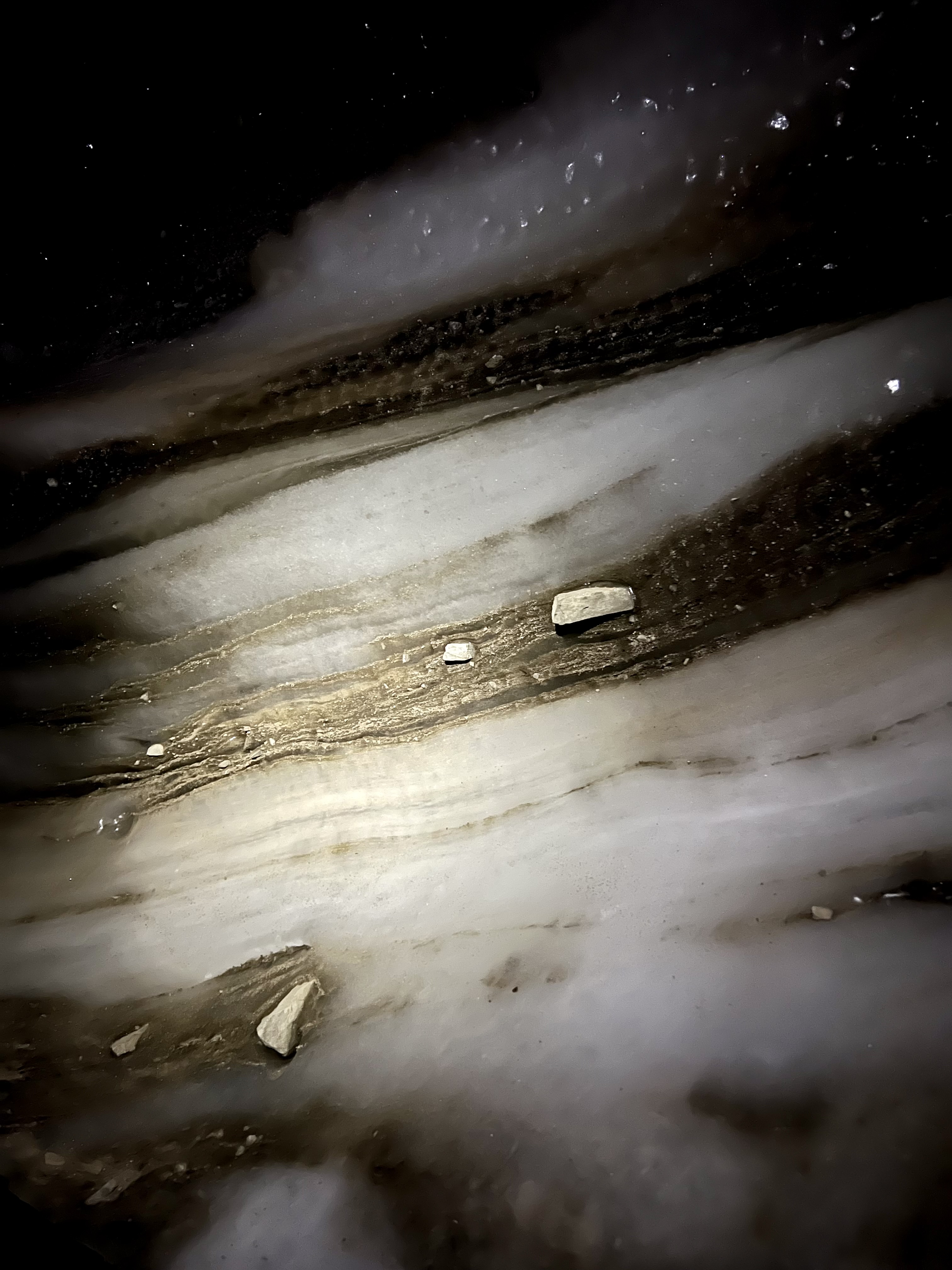
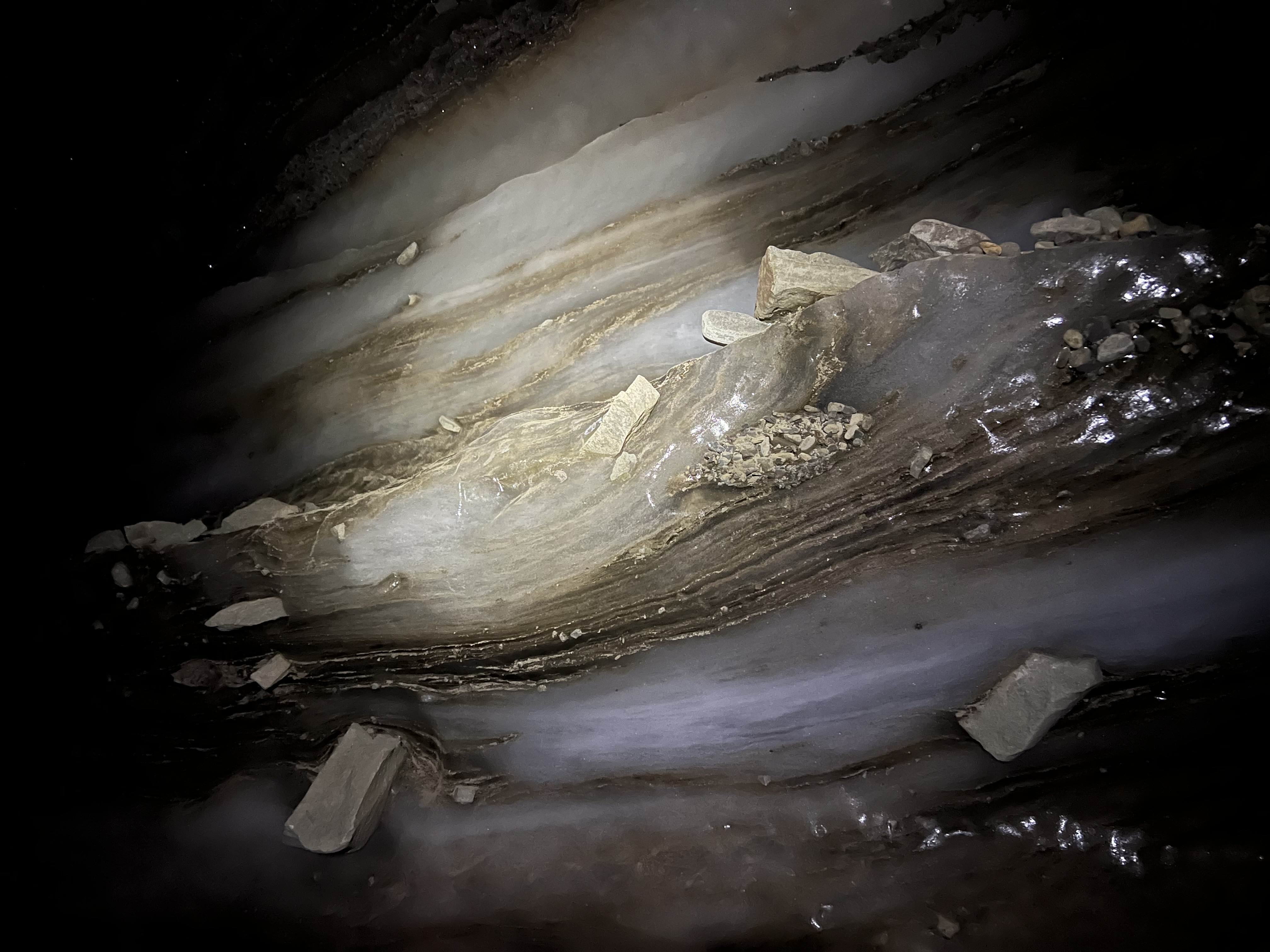
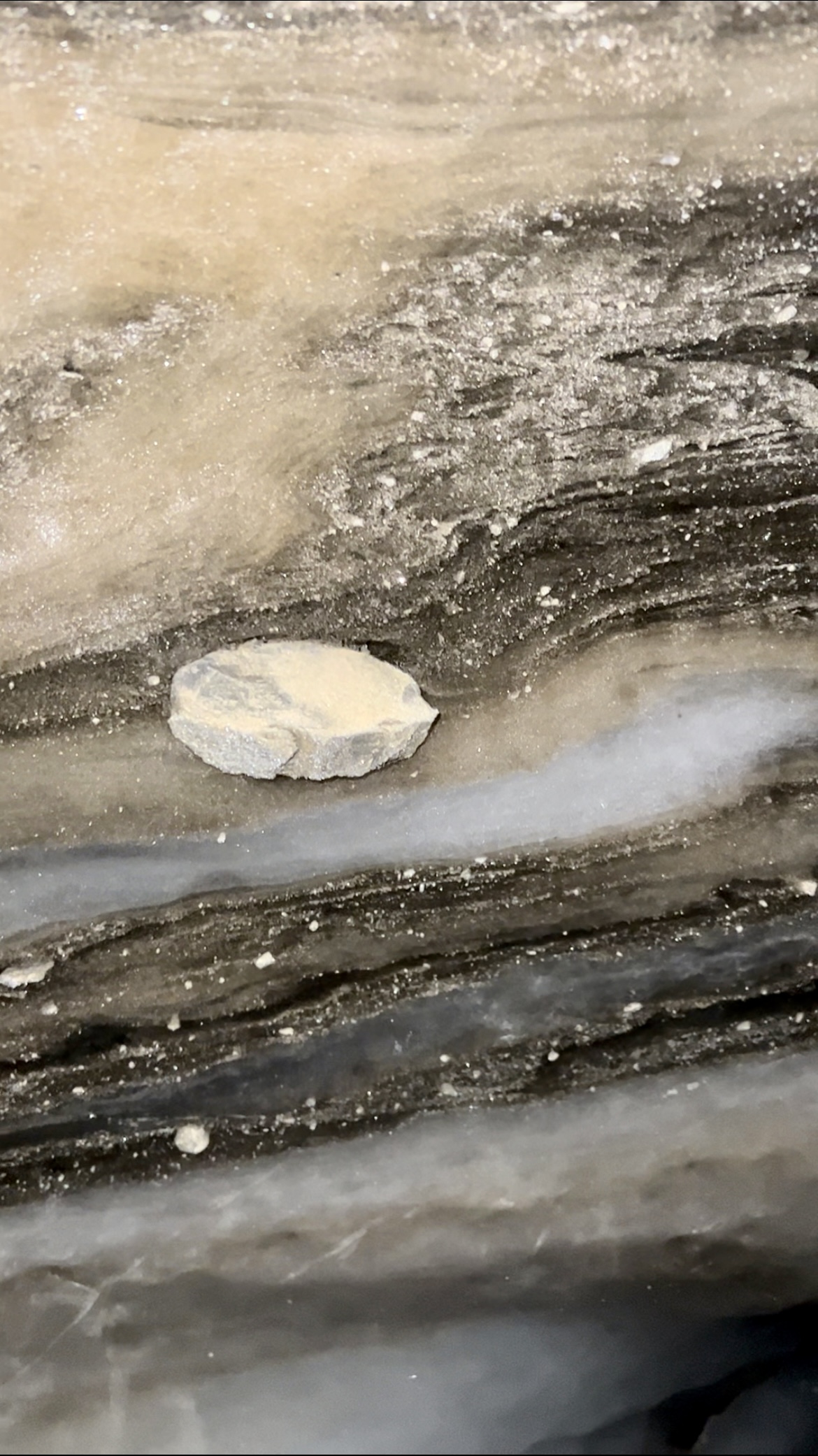
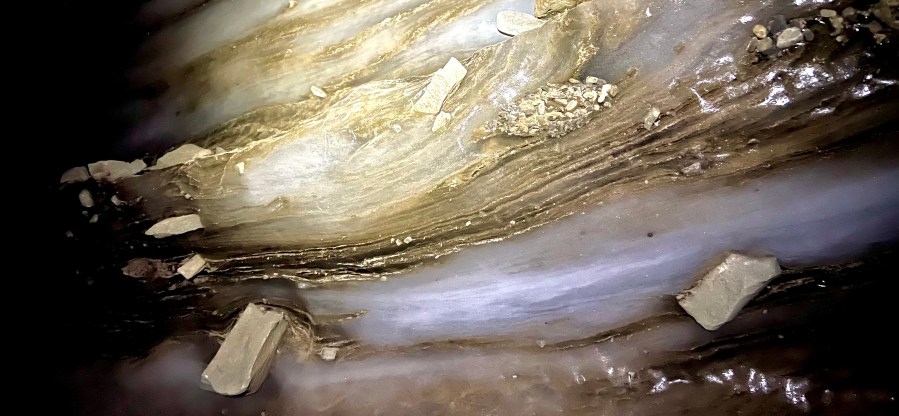
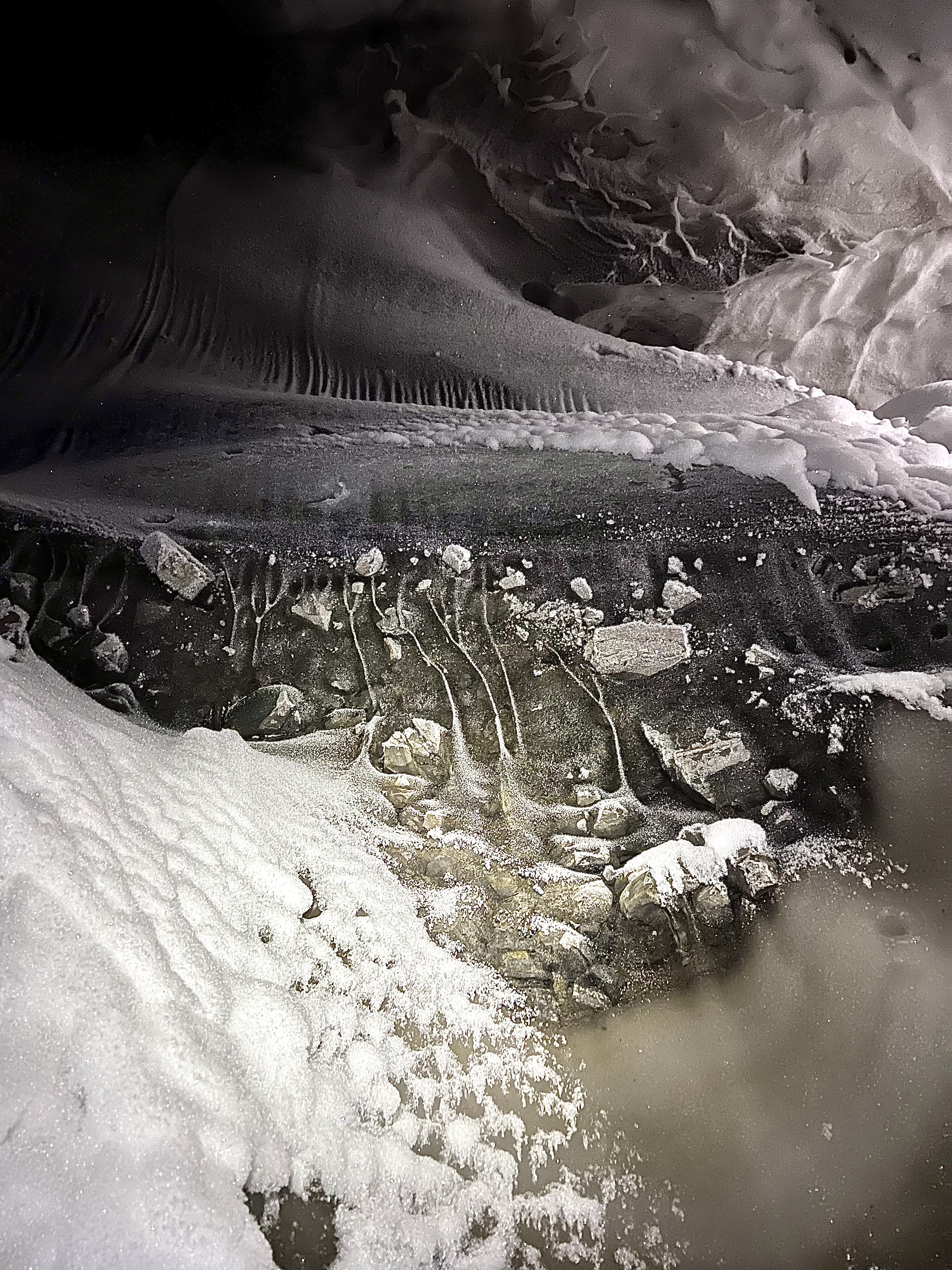
While exploring the meltwater channel in the glacier, I encountered a fascinating sequence of layered ice formations interrupted by distinct sediment bands. These structures reflect the cyclic seasonal changes: Clear ice layers are indicative of the winter periods dominated by snowfall. During these times, precipitation accumulates, becoming compressed under its own weight, initially turning into firn and ultimately into glacier ice. These layers contain hardly any inclusions since the winter cold freezes the surrounding landscape.
As the glacier carves its path through the mountains, it dislodges adjacent layers of earth, causing rocks to fall onto the glacier’s surface. These often freeze in place during the winter. However, in the summer, these areas warm up more due to the albedo effect; the rocks become dislodged, and the meltwater transports them further. They are either carried to the glacier edge, washed into meltwater channels, or accumulated at impassable locations. In the following year, snow again accumulates on the glacier surface, which, over time, compacts into a dense ice mass.
Although these cyclic repetitions are clearly visible in the cross-section of the glacier, they do not allow for predictions about the nature of the next layers. Each year differs in terms of the amount of precipitation, its distribution, sunlight exposure, wind, sediment accumulation, etc. Consequently, the dynamics within and beneath the ice vary from year to year, making each new layer unique.
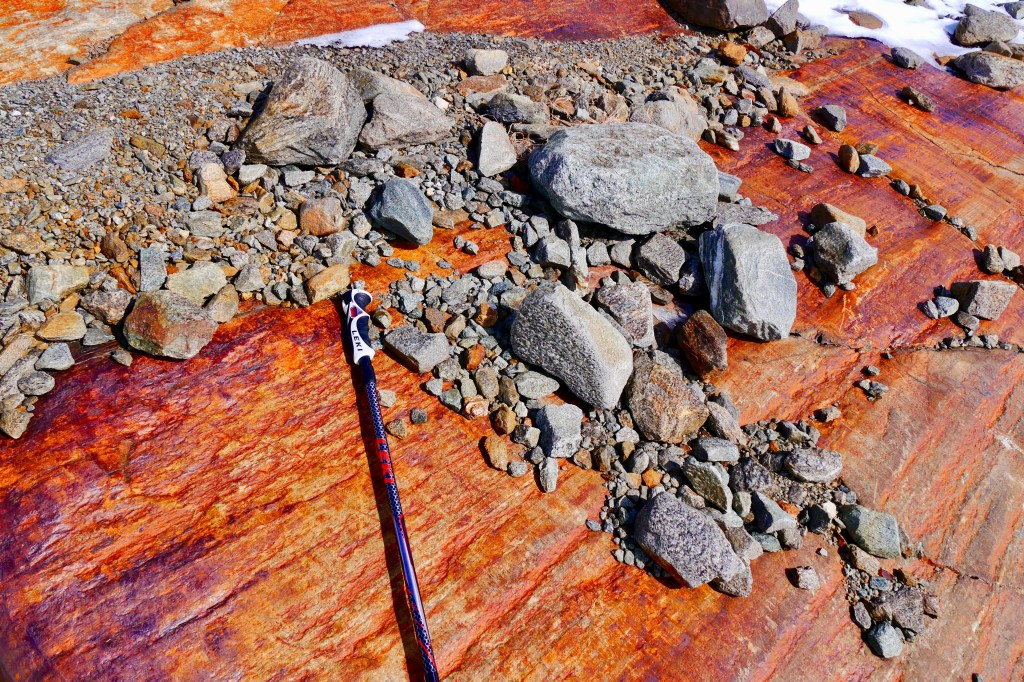
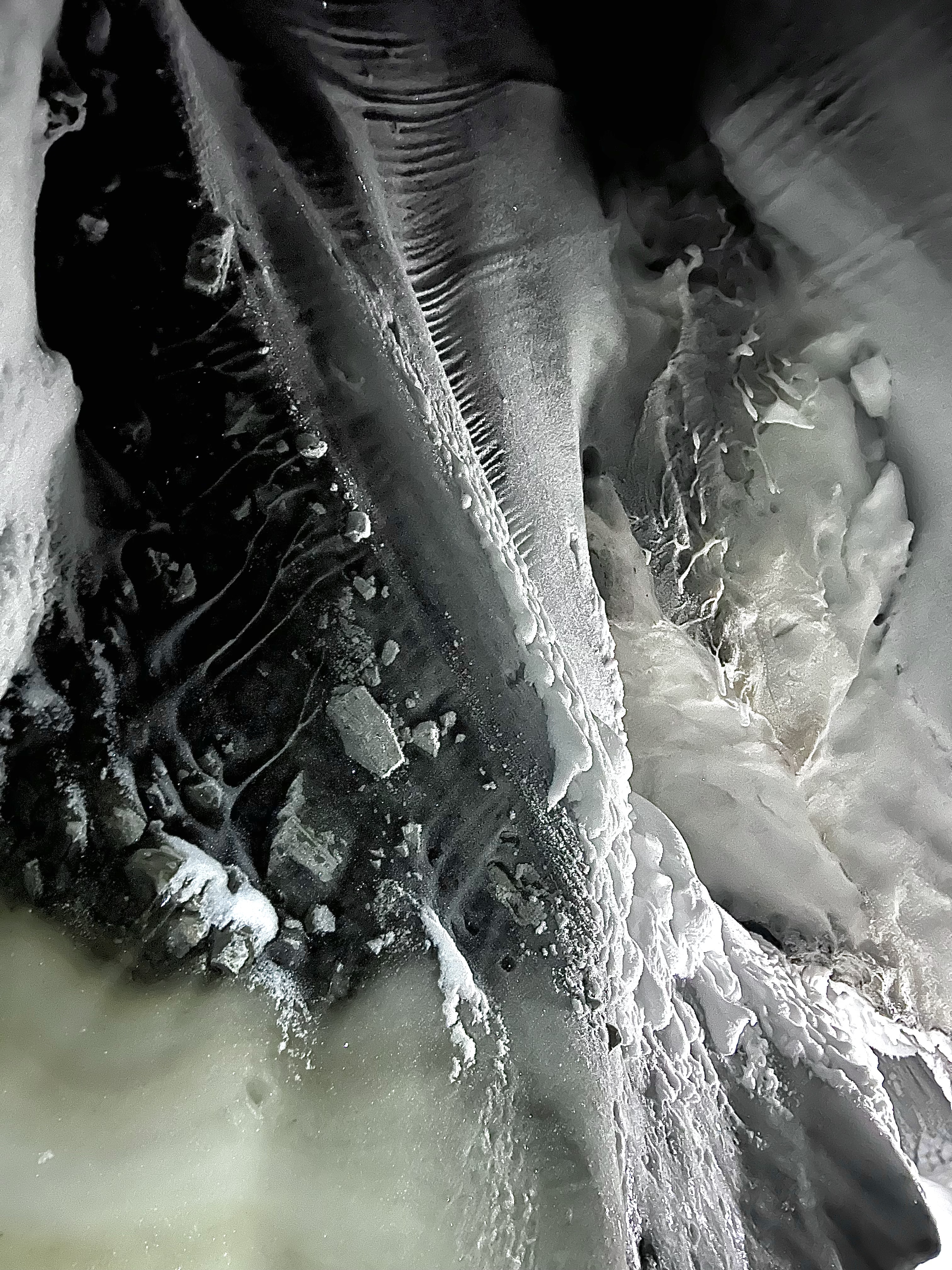
The sediment, primarily found in the summer layers and at the base of the glacier, consists of silt and angular rocks. Silt (particle size between clay particles and fine sand) is created through intense physical weathering, such as friction and frost shattering, which play a significant role in glaciers. The angular rocks, on the other hand, result from relatively short transport distances compared to rivers, where there is a lack of time and necessary mechanisms to round off the stones. Often, these rocks are particularly sharp-edged and flattened due to the pressure they experience when compressed between masses of ice and dragged across the ground at the glacier’s base.
There’s so much more to report: What happens to the sediments after they are washed out of the glacier by meltwater? And why do ice ages have names like Elster, Saale, and Weichsel glacial? How does the landscape change when the glacier has disappeared? Can we honestly say that a glacier shrinks or retreats? So many intriguing questions – but that would exceed the scope here. More on that soon, surely!
I learned all these topics primarily during the lectures on Quaternary geology in the third semester of my BioGeo studies, taught by the lecturer we all affectionately call ToVo. It’s one of my absolute favourite subjects so far. Having the fortune to see all this within and beneath a glacier makes me incredibly happy, and I can’t wait to explore more ice caves here in Svalbard.
And if you’re wondering where the bio part comes into all this stone and ice, As early as the beginning of the 2000s, researchers discovered strains of bacteria under hundreds of meters of ice in Iceland. They were able to prove that these are distinct organisms that have adapted to the extreme conditions under the ice. What do they feed on? Chemical substances are provided by volcanic activity beneath the glaciers. Fascinating how everything comes together again, isn’t it? Bio On The Rocks, or in this case, Bio Under The Rocks, is indeed everywhere!



 Bio On The Rocks