
Welcome to Bio On The Rocks! As announced, I would like to write more about a few stations of the Safety Course. Today we’re talking about the danger of avalanches. I already mentioned in my last blog post that avalanches are by far the type of accident that causes the most injuries and deaths in Svalbard. Contrary to what most people think, polar bears are not the greatest source of danger.
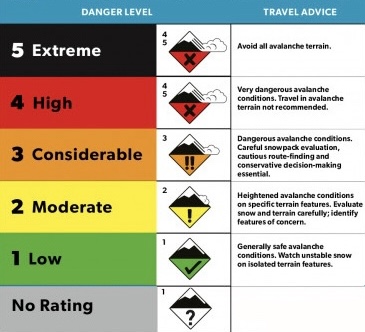
What I have already mentioned a few times is that good preparation is half the battle. What kind of group are you travelling with? What kind of attitude does my group have towards safety risks? What terrain are we entering? Where is there potential avalanche danger? What is the current weather? What is the current avalanche danger locally? This means that you must be able to correctly interpret the avalanche danger levels from zero to five. Most accidents occur at levels two and three because people often misjudge or underestimate the risk there. Level four and five, the highest warning levels, are mostly avoided because the danger here is particularly acute.
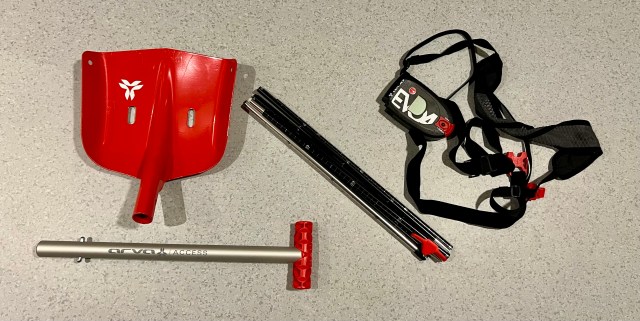
But beyond that, the equipment is also very important, especially here. There are three things that go hand in hand and that you should always have with you. This is the avalanche beacon (the avalanche detection device), the probe (long telescopic stick as a search aid) and a shovel to dig out buried people. As harsh as it may sound, this equipment can mean the difference between life and death.
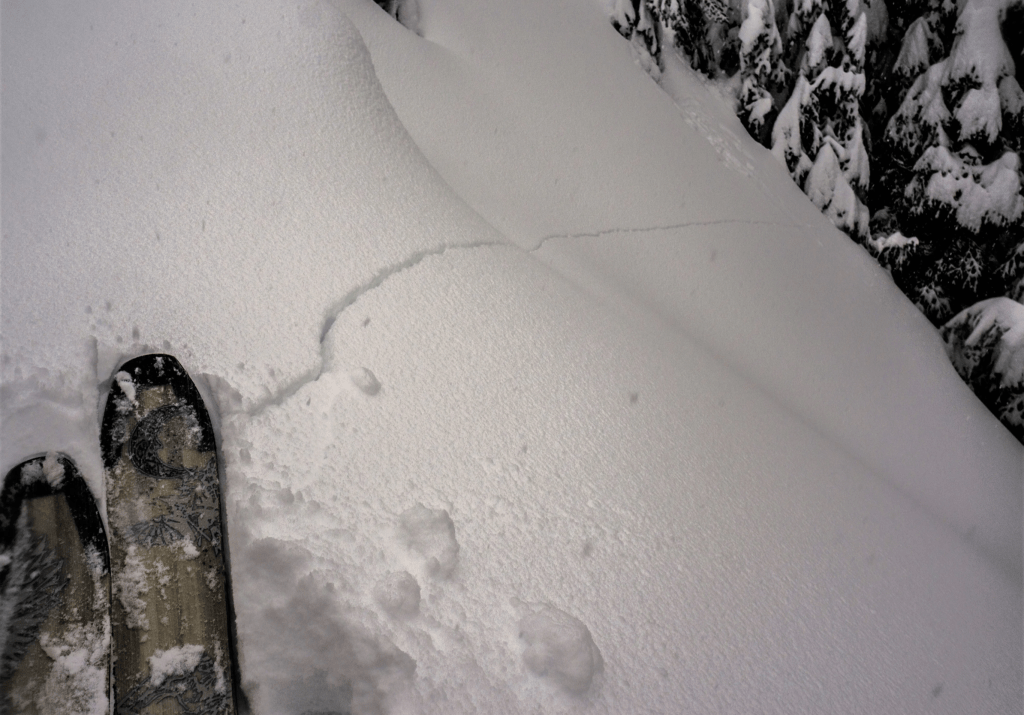
What can I pay attention to when I move in the landscape? Avoid potentially dangerous slopes with a slope angle of 35-45°, where snow can easily accumulate, and the angle can still easily trigger avalanches. The perfect avalanche angle is 38 degrees. Listen for clues like an unsettling whumpf sound or cracks in the snow surface. They can tell you that a layer of snow is about to come off. You should also avoid terrain traps such as cliffs or forests, which can limit your ability to escape.
If, despite your own best preparation, you find yourself in the situation of being at the scene of an avalanche accident, the same – as always – applies here: your own safety comes first!
It is crucial to understand that the location where an avalanche has already occurred poses an increased risk of further avalanches. Avalanche dynamics can trigger a dangerous cascade in which one avalanche provokes the next. Even when the urge to help the injured is overwhelming, your own safety must always come first. The risk of being caught in another avalanche is real. Our training clearly emphasised that first responders must first ensure that there is no longer an imminent avalanche risk before they can provide assistance.
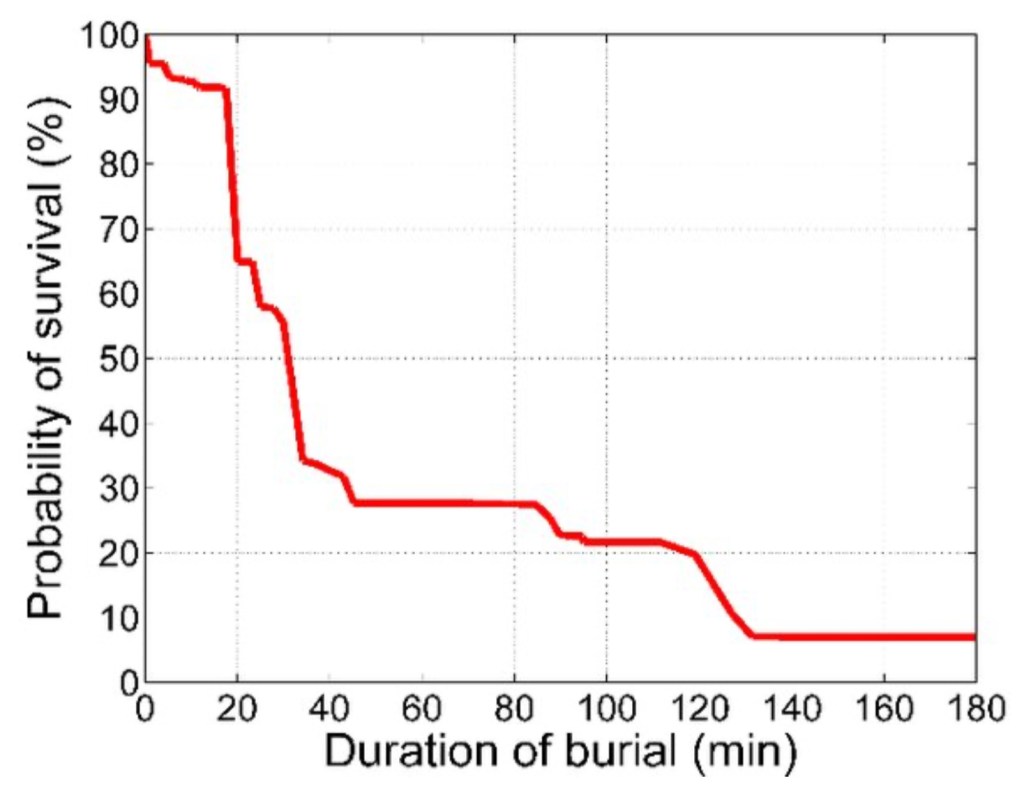
Afterwards, the procedure of how to help must be carefully considered. And this itself can vary greatly depending on how many helping hands there are. The easiest and quickest way to find a person is to use the search function on your own avalanche beacon, which you should definitely have with you. The beacon from the missing person sends out signals that can be recognised and assigned in terms of distance and direction. This makes finding a person a lot easier. Finding and digging out a buried person quickly is incredibly important. After 15 minutes, the chances of survival for a person who has been buried decrease exponentially due to the lack of oxygen.
The chances of finding a person who doesn’t have an avalanche beacon with them are extremely low. There may be clues on the snow surface, such as a ski pole, a backpack or even a helmet, that can indicate where the buried person is. But even then, tracking it down with the probe is time-consuming and may simply require luck. There are different methods of how you can proceed. You can probe in a spiral around a potential discovery site or suspected discovery site, or you can organise probe lines with helpers who successively search the area.
The majority of students who took the safety course agreed. The Avalanche Training is the station that we would like to practice even more intensively. Precisely because it is so difficult to rehearse the situation even remotely as one would find it in reality. The safety instructors did their best to let us practice under the most realistic conditions possible. Although we obviously couldn’t and didn’t want to bury real people under masses of snow, liquid-filled dummies allowed us to test what it feels like to locate and dig up a body using our equipment. Finding people without a beacon requires precise attention to detail, even a single glove can provide an important clue. We were also able to practice keeping our eyes open in all directions and looking for potential clues. And, of course, the handling of the beacons, which worked very well. However, it should also be said at this point that each device is slightly different in terms of handling. And you definitely have to familiarise yourself with any new device before you go into the field.
My personal conclusion: I have always seen something very peaceful and calming in snow-covered mountains. Maybe things are a little different now. My respect for the avalanche issue has definitely increased, but I now feel much more confident in my own preparation for a trip to the mountains.
Stay safe AND get yourself a beacon before going into the snowy mountains!
 Bio On The Rocks