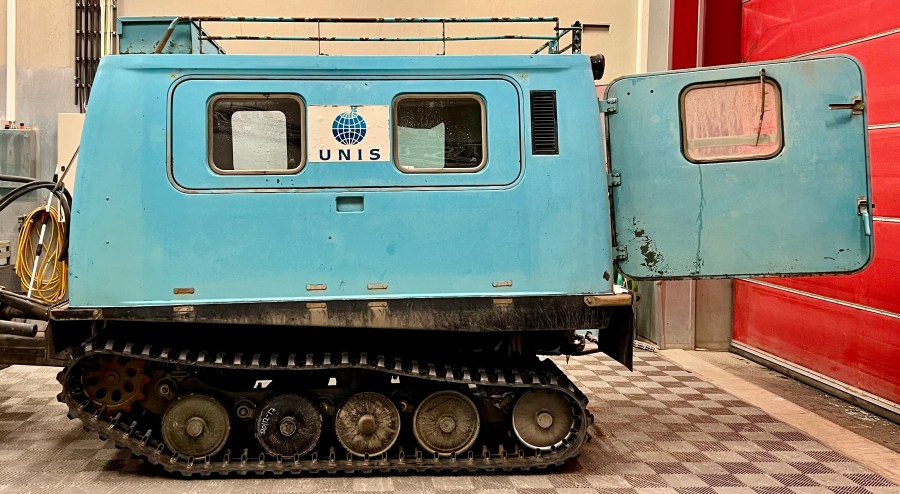
Welcome back to Bio On The Rocks! In my second blog post, I would like to tell you about my first week here in Longyearbyen and at UNIS, especially about the intensive experiences in the Safety Course.
When you think of Svalbard, polar bears and the extreme cold automatically come to mind. These are also the two things I was warned about by everyone who knew about my trip to Svalbard. “Wow, it gets really cold there. Do you have the right clothes for that?” and “You know that there are polar bears up there. So will you learn to shoot too?” Yes, both of these risk factors exist up here. However, after an intensive week and the safety course at UNIS, I must emphasize that the coldness is a far greater risk than the polar bears. But more on that in a moment.

I arrived in Svalbard on Friday afternoon last week. In my opinion, my luggage was filled with warm clothing and gear that I would need up here. First, I had to store my luggage in my room. The rooms are definitely big enough and offer plenty of storage space. My weekend was comparatively unspectacular. I explored the supermarket, which had a much larger selection than I would have expected. The walk from the student dormitory to the supermarket is less than 2 minutes. So, I didn’t have enough time to really assess the cold up here. But that should happen soon enough.
On Monday morning, all current students were welcomed to UNIS and the Safety Course was initiated. This means that students who already studied here last semester must also take part in the safety course. Practice never hurts. In addition to some organisational things that were explained to us, we had the first official unit of the Safety Course: “How do I dress under the given conditions?”
Actual temperatures of -25 to -30 degrees Celsius are not uncommon up here. On the contrary, the perceived temperatures represent the actual dangers. With extremely high wind speeds, even -10 degrees suddenly feels like -30 degrees Celsius. Therefore, the right clothing must be chosen from day to day. The correct system is layers. As we learned, wool is your friend. The four big advantages of real wool are: There are lots of air pockets in the large stitches that insulate; wool also keeps you warm when wet; wool transports your own sweat to the outside; and last but not least, wool smells much less than other materials.
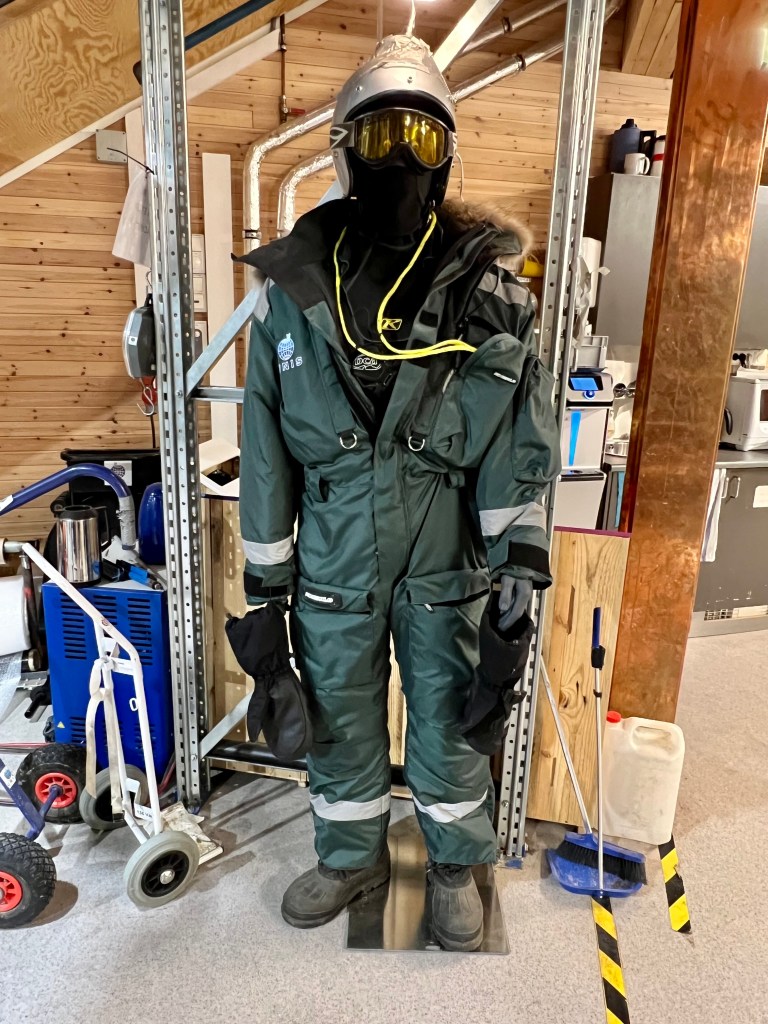
Care should be taken to have a base layer made of wool, a thick layer, for example, a wool sweater, a windproof layer and a down jacket or a layer with very large air pockets. The general rule for clothing is: it’s better to be too big than too small. If the skin lies directly against the clothing, especially shoes and gloves, an insulating layer of air cannot form, and the actual warming effect is then missing. It’s also great that at UNIS you can always rent warm clothing, be it a full snowsuit or just shoes or gloves. There is enough material for everyone, the rental process is very simple, and no one has to freeze. So, we were well prepared for the coming days.
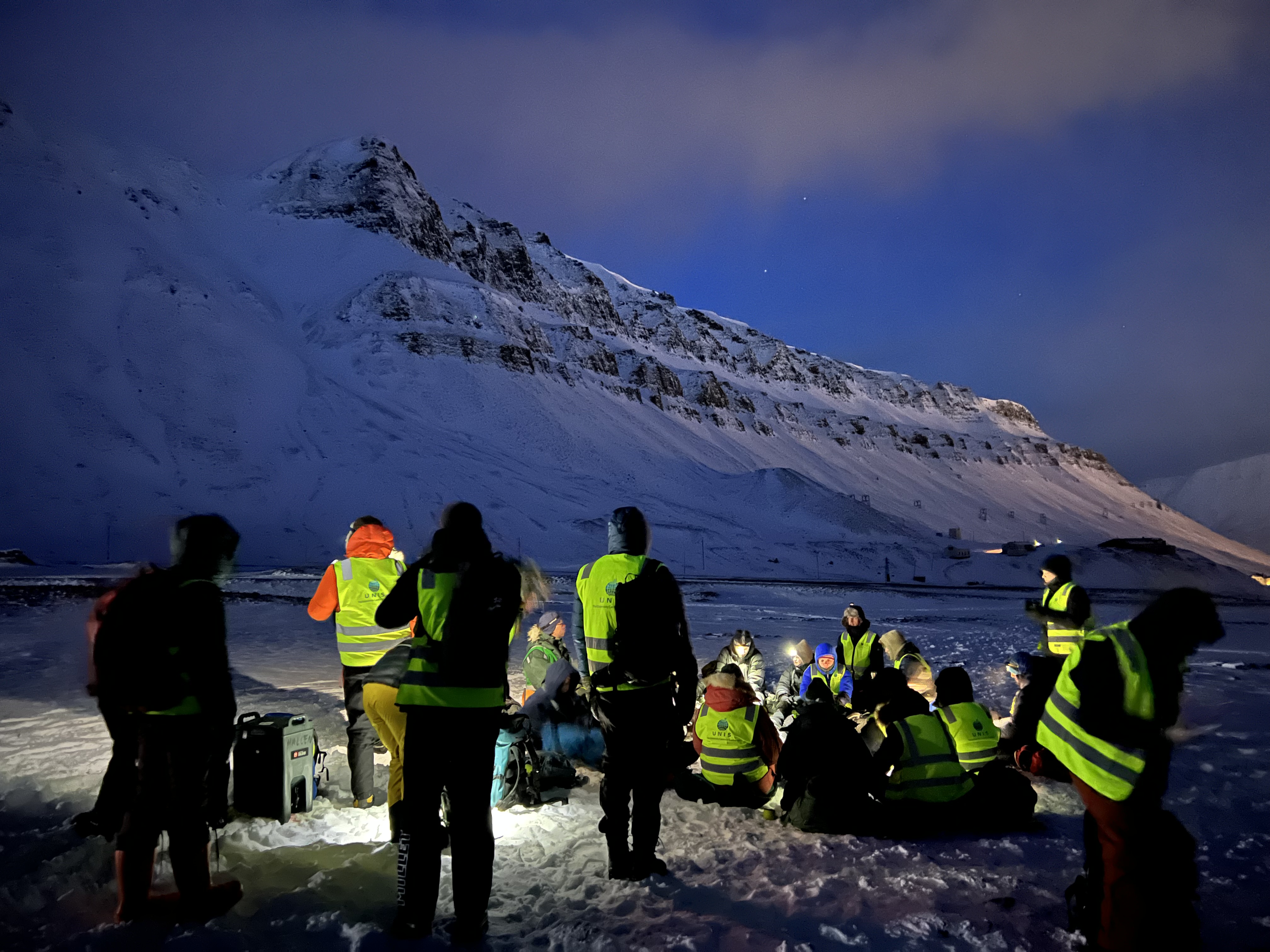
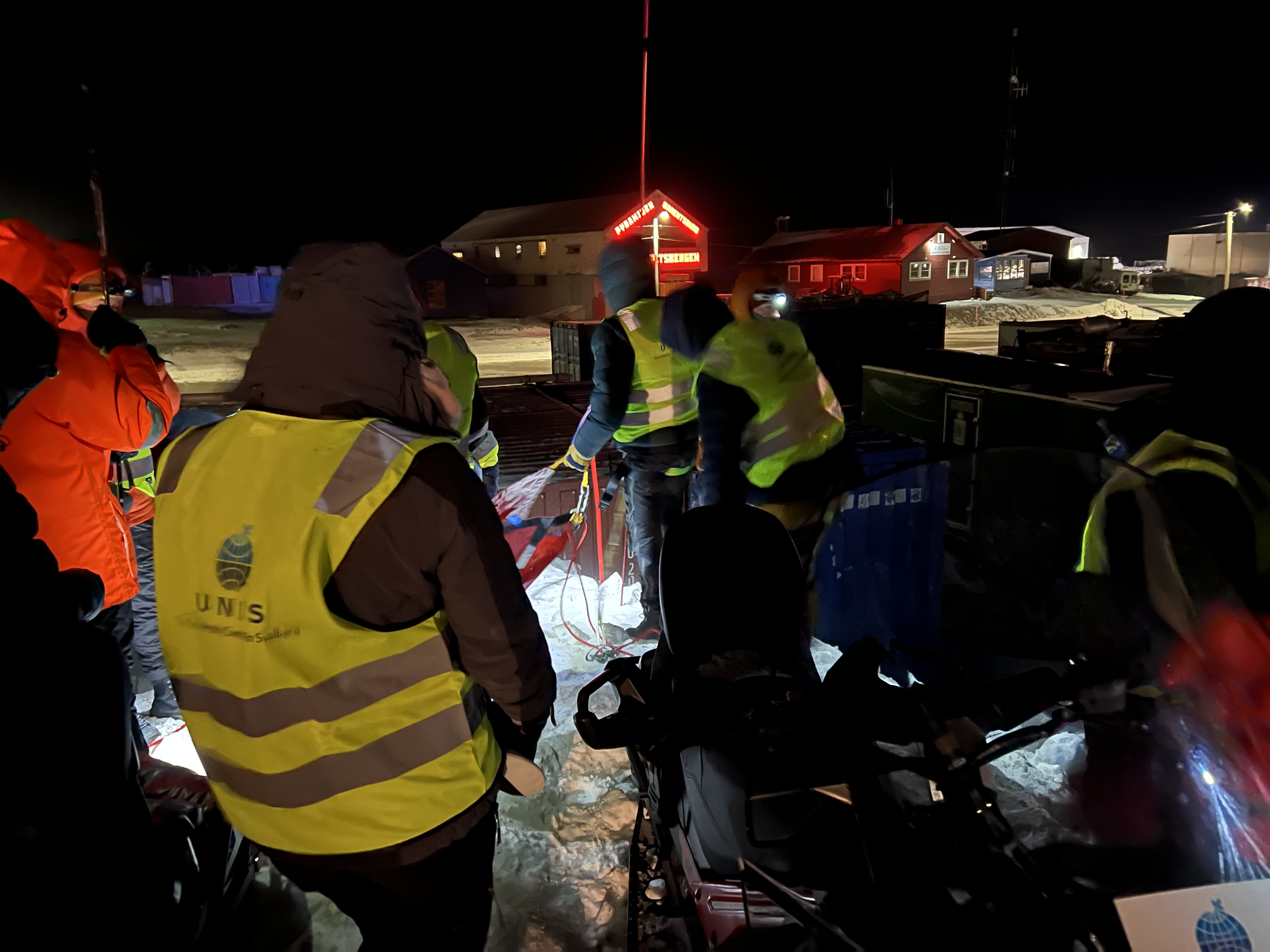
We were divided into eight groups; in each group, there were students from bachelor’s, master’s and PhD courses from all disciplines that UNIS offers. Of course, there were people who had more and some who had less experience in dealing with individual risky situations. This meant we were able to benefit incredibly well from each other. From Tuesday to Friday, each group went through a total of eight different stations, two each day, in which theoretically, but above all also practically, how to deal with various risk factors on and around Svalbard was practised. These stations were first aid, communication methods, emergency equipment, avalanche dangers, glacier hazards, the danger of sea ice, handling a weapon, and polar bear risk factors. On Saturday, everything we learned and practised was tested again in five different scenarios under conditions that were as realistic as possible.
It’s difficult for me to convey in a comparatively short blog post how intense and educational this week was. Even the supposedly well-known topics such as first aid, communication and emergency equipment provided us with so much new information that is vital for safely exploring nature on Svalbard.
Even in more temperate latitudes, some students have certainly found themselves in situations in which they had to provide first aid. But always without the risk of suffering hypothermia yourself. It’s a fine line you walk, tough decisions you must make. Even if you stick to the sABCDE pattern, weigh up your own safety first and provide first aid according to the known guidelines, you will still come across situations in which you have to weigh things up. Am I looking at a person who isn’t breathing and needs CPR or am I looking at a person who I want to breathe, so I clear the chest, but they’re starting to get hypothermic. It is not easy to consider all aspects, and it is all the more important that you can rely on your teammates, the people in your travel group, that you have a person who keeps track of things, delegate tasks and maintains communication between those helping. This applies to any unpleasant situation you may find yourself in.
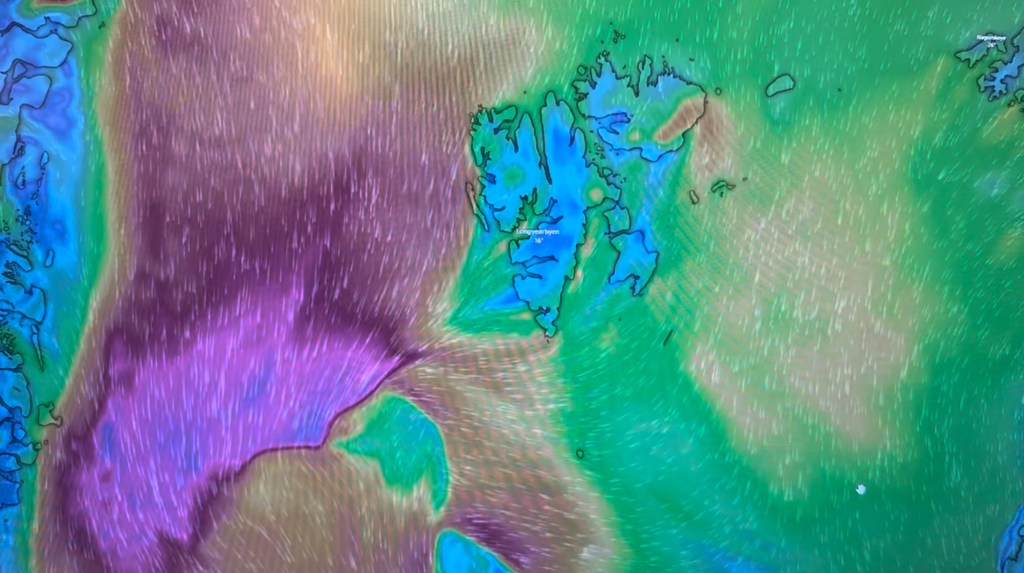
Everyone knows that when you find yourself in a tricky situation, you should call for help as quickly as possible. And in many regions, this works wonderfully using a cell phone. Within Germany, this also means that the police, rescue service or fire brigade can be at your location within 10 minutes. It’s just that cell phones don’t work up here in most cases and hardly anyone has had to deal with using a satellite phone. So, this also needs to be practised. Just like orientation in the terrain when you may not be able to see anything. How do I use a GPS device and radios to communicate with my group? These aren’t just useful things that are nice to have, they are devices that can decide the outcome of a difficult situation. With a satellite phone, you can request a rescue helicopter in any unpleasant situation in which you need help. But despite the extreme helpfulness of the rescue workers, the helicopter usually doesn’t arrive at the scene of the accident before an hour. How do you organise yourself in that time? How do you find protection?
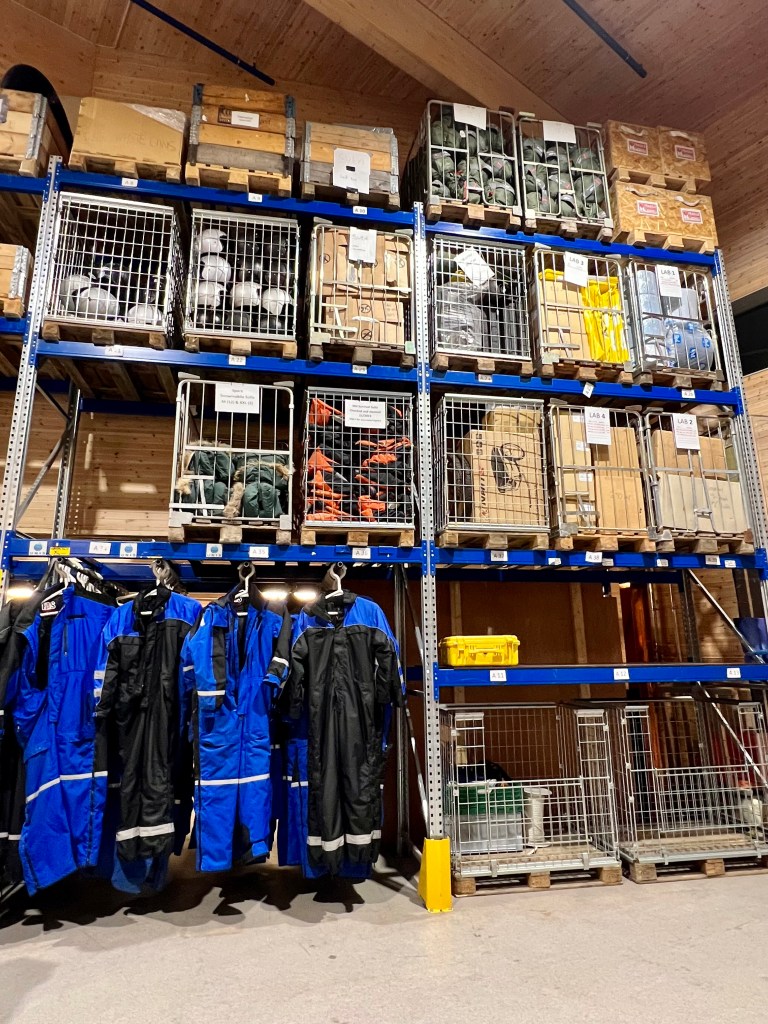
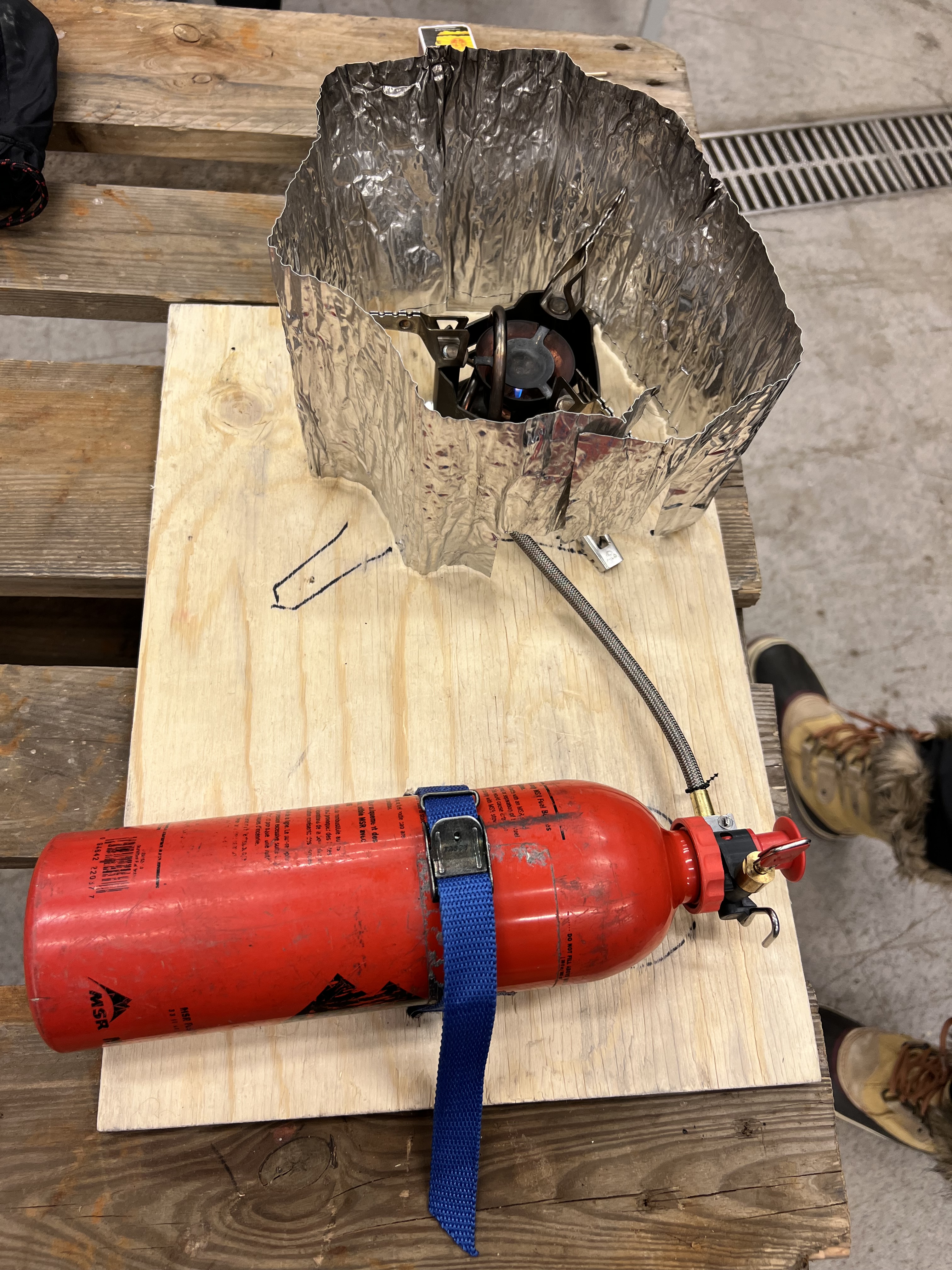
UNIS provides students with an emergency box on every trip with all the useful items needed for an emergency camp. The most important part is the tent. Everyone has done it before to put up a tent. But hardly anyone under such adverse conditions as absolute darkness, temperatures below -20 degrees, and wind speeds over 10 m/s. So, this is something that definitely needs to be practised, under real conditions. There are many things to consider. In which direction do I orient the tent? How do I secure the tent against cold and wind? Where do I position the stove, which I can take into the tent taking various things into account? How do I make sure we don’t get CO poisoning? Which people stand guard outside the tent and watch out for potential dangers from a polar bear?
And that brings us to a very big topic: the danger of polar bears on Svalbard. However, I would like to point out straight away that if you look at statistics with accident numbers, the danger from the polar bear only comes in fourth place. By far the greatest danger is avalanches. Since I would like to pay sufficient attention to the topics of avalanche dangers, glacier dangers, sea ice dangers and the danger of polar bears, additional blog posts will follow in the next few days.
But I would like to highlight again the most important thing that we have been taught in the last few days. It’s so easy to put yourself in danger up here when trying to help another person. Therefore, we were repeatedly and emphatically told that before we help someone else, we must first make sure that we are not in a dangerous situation ourselves. STOP is the keyword here. Safety, Think, Observe, Plan. Before you go on a trip yourself, plan it in detail with your group. Everyone is given a specific task and different equipment; you check maps, plan a route, check the weather, and ask specialists. But even if you have planned everything optimally, you will always come across situations that you did not consider or that turn out differently than planned. Re-sorting, observing, and re-planning is almost always necessary. It is incredibly important not to stick to your plan A at all costs, but to have plans B, C, and D ready and to turn around when the situation calls for it and group members no longer feel comfortable.
And with these wise words, I say goodbye for today and…
Stay safe!
 Bio On The Rocks